Some links here go to Amazon. If you buy through one we may earn a commission, at no extra cost to you. It does not change which products we include or what we say about them — the Solris light is ours, and we say so.
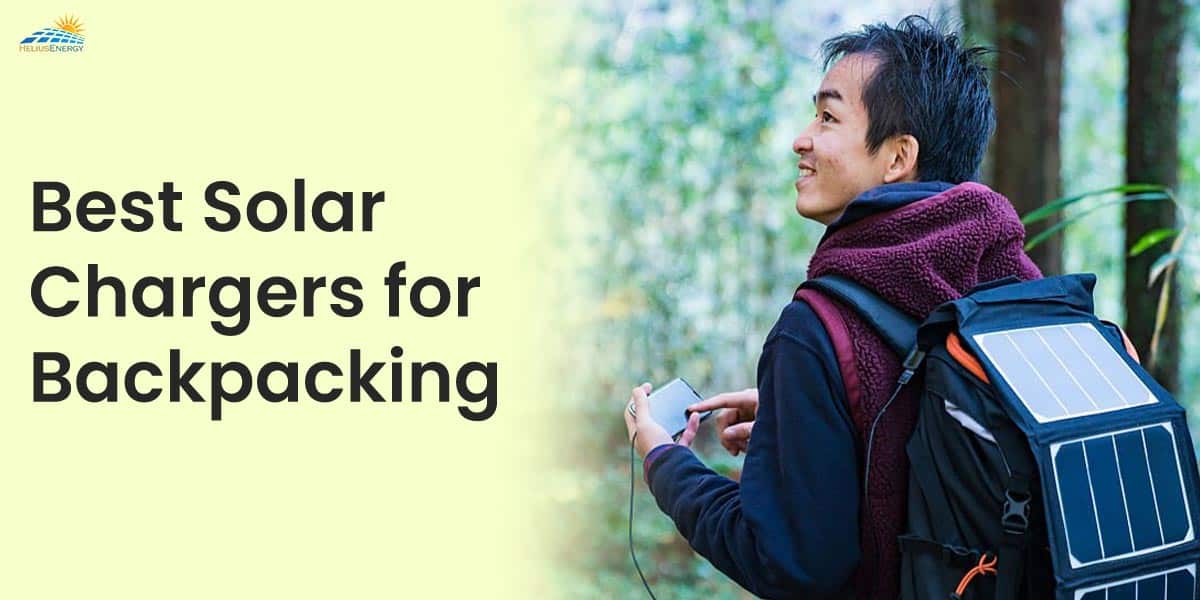
Going outside with your backpack, hiking and camping equipment and interacting with nature requires disconnection, although you might want to bring your electronics just in case or to take photographs. Using a solar charger is the greatest method to keep your electronics charged when in the great outdoors.
You don’t need a wall outlet since solar chargers and power banks produce electricity from the sun. It is practical, particularly when bad weather causes power outages.
You may utilize the electricity or solar energy to run your appliances and charge things like your laptop, fan, fan batteries, and cell phone. To help you decide which solar charger to buy, we’ve listed below the top models on the market. We have included premium solar chargers that are reasonably priced and offer solid durability.
Best Solar Chargers for Backpacking In 2023
Editor's Choice
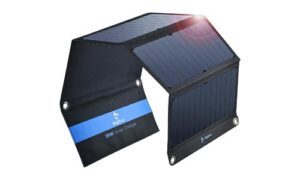
BigBlue 3 USB-A 28W Solar Charger
Battery Capacity: 2800 mAh Waterproof: IPX4 Connectors: 3 USB A Ports Efficiency: Upto 24%Compatibility: Speakers, Headphones, Iphone & Andriod Phones
Check priceLarge Battery Capacity
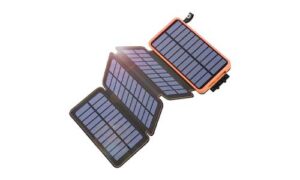
Tranmix Portable Solar Phone Charger
Battery Capacity: 2500 mAh Waterproof: YesConnectors: Dual USB 2.1 A Ports Efficiency: Upto 15%Compatibility: Tablets, Iphone, Andriod Phones and other USB devices
Check priceFast Charging solar Charger
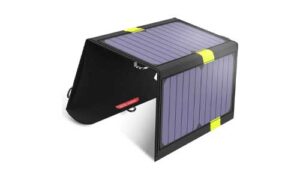
X-DRAGON 2500 mAh Portable Solar Charger
Battery Capacity: 2500 mAh Waterproof: YesConnectors: 2 USB Ports Efficiency: Upto 25%Compatibility: Iphone, Andriod Phones and other usb devices
Check price1. BigBlue 3 USB-A 28W Solar Charger
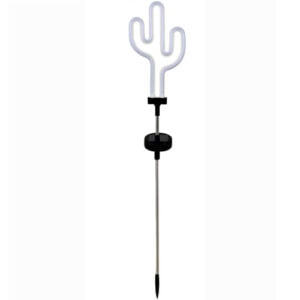
Made by us
Solris™ Neon Cactus Solar LED Stake Light for Garden, Landscape, Home Decor
From: Original price was: $32.52.$21.51Current price is: $21.51.
- Solar Panel: 2V 80mA panel
- Solar Light Color: Neon Green
- Solar Light Source: LED bulbs
- Battery: NI-MH AA 1.2V 600mA
Editor's Choice
BigBlue 3 USB-A 28W Solar Charger
9.5 / 10
Pros
- Economical and rapid Charging
- Excels under challenging circumstances
- Inexpensive
Cons
- Not portable
- Bulky
The BigBlue 3 surpasses all my expectations. This panel keeps its position at the top of the pack for another year due to its outstanding charging capabilities and consistent performance across the board. Nothing matches this model regarding overall performance, even though there may be other alternatives that charge more quickly or have cooler looks.
I personally adore the built-in ammeter as a feature. I also value this panel’s affordability and simplicity. Although the weight of this panel is a drawback for me, it’s a little heavy, coming in at 21.8 ounces. As a result, it is more appropriate for usage in front-country terrain, while it will perform well everywhere else. Due to all these factors, i will say this is the best solar charger for backpacking.
| Specifications | |
|---|---|
| Power | 28 W |
| Folding Size | 11.1x 6.3x 1.3in |
| Unfolded Size | 33.1x 11.1x 0.2in |
| Weight | 1.57 lbs |
2. Tranmix Portable Solar Phone Charger with 4 Solar Panels
Large Battery Capacity
Tranmix Portable Solar Phone Charger with 4 Solar Panels
9.4 / 10
Pros
- Massive Capacity High-quality lithium polymer battery and several security measures are built in.
- High-Speed Charging: intelligent IC chip-controlled to prevent overload, overcharge, overcurrent, and short-circuit.
- Built-in waterproof, dustproof, and shockproof design with an extremely bright LED emergency light
Cons
- Heavyweight
- Lacks Portability
This solar window charger can come in handy whether you’re walking up in the mountains or fishing down by a lake. It has four panels, which allows it to charge your gadgets four times as quickly, and it has the capacity to charge your phone for a whole week. Due to its, charging power it is not an understatement to say this is one of the best solar charger for backpacking to buy.
Two devices can be charged concurrently with this solar charger. A 2000mAh phone will charge in 1-1.5 hours, whereas a 5000mAh tablet would take 2.5 to 3 hours. The waterproof cover on the USB port can shield it from water and dust.
| Specifications | |
|---|---|
| Power | 25000 mAh |
| Folding Size | 6.1x 3.35x 1.37 inch |
| Unfolded Size | 10.4x 6.1 inch |
| Weight | 1.12 lbs |
3. X-DRAGON 2500 mAh Portable Solar Charger
Fast Charging Charger
X-DRAGON Monocrystalline Portable Solar Charger
9.3 / 10
Pros
- Fast Charging
- Wide Compatibility
- Waterproof
Cons
- Not lightweight
- Not weatherproof
Both Apple and Android phones can be recharged. You can recharge an iPhone somewhere between 6 and 10 times. Additionally, a Samsung phone may be recharged six to seven times. It will thus become your ideal traveling companion. Not only will your phone be charged, but so will your buddies.
You can thus unfold all 4 plates if the battery bank runs out of juice completely and has to be swiftly recharged. You’ll spend far less time charging as a result. You may thus spread out the dishes and replenish your battery bank while eating.
The fact that it is waterproof it becomes more appealing and definetly it makes this solar charger a contender for best solar charger for backpacking. Therefore, it is not a delicate item that requires your attention while in use.
It also includes a built-in safety feature that guards against overcharging and over-discharging. Therefore, the system will automatically shut off when it is fully charged. This will stop any potential accidents or mishaps.
| Specifications | |
|---|---|
| Power | 25000 mAh |
| Folding Size | 12.1 x 7.2 x 0.51inch |
| Unfolded Size | 23.3 x 12.1 x 0.12inch |
| Weight | 1.34 lbs |
4. ADDTOP 25000mAh Portable Solar Phone Charger
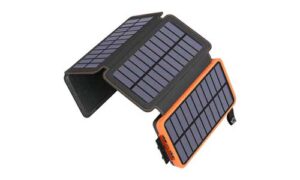
Good For Dual Charging
ADDTOP 25000mAh Portable Solar Phone Charger
9.4 / 10
Pros
- Decent charging speeds
- Good battery capacity for the price
- Uses dual output ports
Cons
- Lacks wireless charging capability
Addtop is a considerably smaller company than other power bank manufacturers, but its solar power bank products can still be a fantastic choice for many customers.
You can obtain a great amount of capacity and performance for a reasonable price with the Addtop solar power bank. This solar power bank has a 10.5-watt rating for power production, which is decent but not the maximum. But in contrast to other choices available, this one does not include a wireless charging option.
I initially charged it with a walking plug, then went on a day excursion outside of town with it. I inserted my USB chord into this solar power converter when my phone needed to be recharged. It immediately reached a charge of 50%, which was plenty for me to use straight away.
So I think solar charger will be useful when there is a power outage (as long as I keep it charged), while I’m camping, or when I’m on the road without access to a plug. I’ve only had it for a short while, but so far, so good—especially considering the cost.
| Specifications | |
|---|---|
| Power | 25000 mAh |
| Dimensions | 6.1 x 3.14 x 1.18 inches |
| Weight | 1.19 lbs |
5. FlexSolar 10W Portable Solar Panel Charger
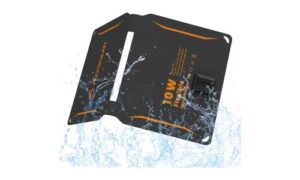
Best Portable Solar Charger
FlexSolar 10W Portable Solar Panel Charger
9.2 / 10
Pros
- Optimal Sizing
- Durable
Cons
- Only effective under full sunlight
The solar phone charger with 10W USB output is lightweight and backpack-friendly with an ultra-slim and folding design, smart hooks, and carabiners.
What it’s good for: Charging your smartphone, power bank, and other 5V Micro-USB, Type-C, and Lightning electrical devices when trekking, hiking, camping, and cycling.
| Specifications | |
|---|---|
| Power | 20000 mAh |
| Folding Size | 7.6x 8.8x 0.7 inch |
| Folded Size | 15.5x 8.8x 0.1 inch |
| Weight | 0.98 lbs |
What To Look for While Buying Solar Chargers For Backpacking
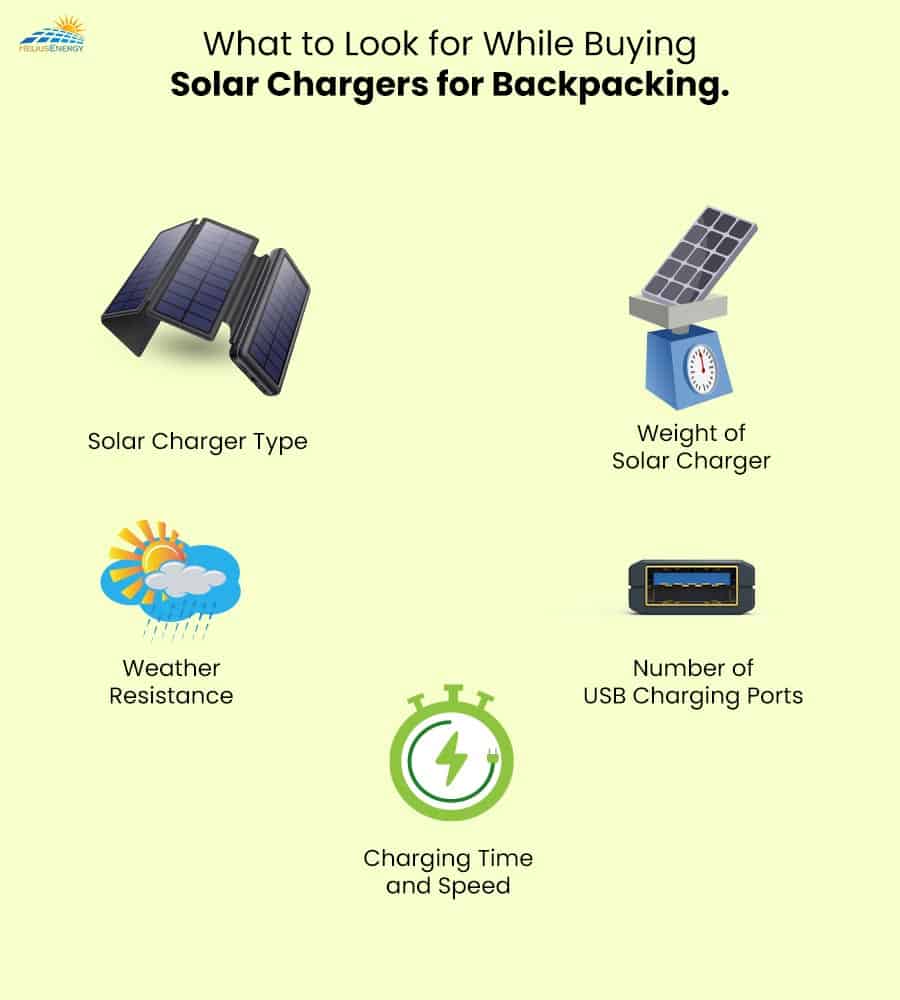
1. Solar Charger Type
Solar chargers come in a wide variety of styles nowadays. They may be divided into two basic categories, stiff or foldable. When trekking, climbing, or camping, users of foldable solar chargers may fold and carry them like a map because of their lightweight and flexible construction.
In order to handle more wear and tear during outdoor activities, rigid solar chargers typically incorporate stronger panel frames made of metal or plastic.
Additionally, they provide a wider surface area so numerous devices may be charged simultaneously via carabiners or USB ports.
1. Portable Solar Chargers With A Battery Pack Attached
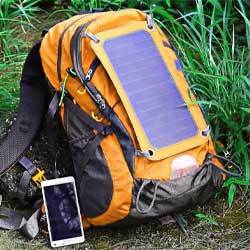
Consider purchasing a portable solar charger with an integrated battery if you don’t want to carry separate solar panels and power banks.
These gadgets are fantastic since they are simple to operate and self-contained. Just open the panel to reveal the solar cells, then leave it in the sun to recharge the internal battery. You may use it to power your gadgets once it has been charged, like a power bank.
2. Portable Solar Chargers With An External Battery Pack
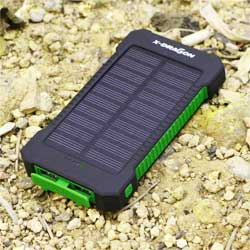
A solar panel and an external battery pack can also be found in solar charger bundles. This might come in handy if you want to utilize a power bank and merely need the means to fill it off while out on your excursions.
Simply attach the battery pack to the solar panel and allow it to charge. You may use the battery pack to charge your gadgets as necessary after it is full.
3. Solar backpack
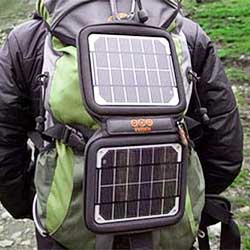
Solar backpacks are also on the market for individuals seeking a complete solution. With the help of the solar panels integrated into these backpacks, you can charge electronics while you’re out and about. They are ideal for bikers, hikers, and anyone who enjoys spending much time outside.
2. Weight of Solar Charger
The size of the panel surface area is often inversely proportional to the amount of electricity required. Every ounce matters when it comes to backpacking; therefore, size and weight are important factors to take into account.
The portable chargers we’ve examined are all lightweight, tiny enough to fit inside even small backpacks, and are all built with portability in mind. Nevertheless, their weight varies according to how they are used.
You probably won’t need a lot of power or extra battery packs if you only carry one or two gadgets on your trip. However, you’ll need a stronger charger and maybe a different battery pack if you want to bring several electrical devices that need charging. Of course, this will increase the overall weight.
3. Weather Resistance
The ideal type for you depends on how you want to use your solar charging equipment. Everyone has a different camping style, whether it’s going on arduous hiking trips or just staying at a cabin for the weekend.
A battery pack can be sufficient for a weekend getaway. However, when it has been consumed, it becomes a useless weight.
A solar charger or another generator may be required for off-the-grid excursions lasting a week or more. Even though many of the camping solar panels on our list are adaptable, there are frequently certain limitations on how they should be used.
For instance, it makes sense to invest in a larger and heavier solar charger than you may acquire for a hiking trip if you have a car or camper van.
Long periods of direct sunshine exposure are necessary for a solar charger to function properly. Sea kayaking and bike touring are two sports particularly suited for “on-the-go” solar Charging.
If you can position the solar panel to face the sun, backpacking on open terrain may be an option. It is not necessary to attach a solar charger to the top of your pack if you are trekking through a dense forest canopy.
Remember that you may also need to consider acquiring additional equipment, such as power generators or mounting brackets.
4. Number Of USB Charging Ports
Unless you want to charge many devices simultaneously, one port should be plenty. But bear in mind that if you charge several devices simultaneously, they will take longer to charge completely.
5. Charging Time And Speed
Depending on the device, a phone or camera can be charged with a solar charger while camping at various speeds. Since the smaller solar panels might take a while to charge fully, it is useful that many of the smaller solar chargers can also be charged via a USB connection.
The amount of direct sunshine required for the solar charger to generate electricity also varies. While smaller models might need more strong light exposure, some of the more costly and bigger panels can operate at considerably lower light levels.
Check the charge duration and whether you can use an outlet to recharge while looking for a solar camping charger. Once more, it all comes down to your intended usage for the solar charger and if it makes financial sense to purchase a more expensive but quicker charging type.
Final Thoughts
In conclusion, the finest solar Chargers for backpacking are your buddy if you want to unplug from your busy daily life and enjoy an adventure in the wilderness with the chance to be electricity-free.
A solar charger that best meets your demands may be found among the many options on the market. You should consider a few things while choosing a solar charger.
A solar panel with an integrated or removable battery can be a better option if you want to use it to charge your electronics for longer periods. Second, it calculates how many and what kind of ports you’ll need based on how many devices you wish to charge.
Third, think about the power they can produce: solar panels with lower wattages are less expensive but likely to be less powerful; solar panels with greater wattages are more powerful and can charge your gadgets more quickly but also cost more.
References
- stiff or foldable news.energysage.com
- Long periods of direct sunshine exposure are necessary conserve-energy-future.com